

The global race to dominate artificial intelligence is entering a new phase as worldwide AI infrastructure spending is projected to reach $1.3 trillion over the coming years. Governments, cloud providers, and technology companies are investing heavily in advanced computing systems, AI hardware, and next-generation AI data centers to support the explosive growth of AI applications.
From generative AI chatbots to intelligent business automation, organizations need faster processors, larger data centers, and stronger cloud platforms to keep pace with growing demand. As a result, AI infrastructure has become one of the fastest-growing segments of the global technology industry.

Why AI Infrastructure Spending Is Rising
The rapid adoption of artificial intelligence across industries has dramatically increased the need for high-performance computing resources. Modern AI models require enormous processing power, making AI infrastructure spending a strategic priority for businesses and governments alike.
Technology companies are investing billions in advanced processors, networking equipment, storage systems, and energy-efficient facilities capable of training and running large AI models. These investments are expected to reshape the digital economy over the next decade.
As AI continues to evolve, organizations understand that strong infrastructure is essential for delivering reliable and scalable AI services.
Cloud Computing Powers the AI Revolution
One of the biggest drivers behind this growth is cloud computing. Instead of purchasing expensive servers, businesses now rely on cloud platforms to build, train, and deploy AI solutions quickly.
Leading cloud providers are expanding global infrastructure to support AI workloads, allowing companies of all sizes to access powerful computing resources on demand.
The combination of cloud computing and AI infrastructure enables organizations to develop innovative products, analyze massive datasets, and deploy intelligent applications without maintaining their own large-scale computing facilities.
Enterprise AI Is Transforming Business
Today’s businesses are rapidly adopting enterprise AI to improve productivity, automate repetitive tasks, and enhance customer experiences.
Financial institutions use AI to detect fraud, healthcare providers improve diagnostics, manufacturers optimize production, and retailers deliver personalized shopping experiences.
As more organizations implement enterprise AI, demand for reliable infrastructure continues to grow. Companies require faster processors, secure cloud environments, and scalable platforms capable of handling complex AI workloads around the clock.
This trend is driving significant AI investment across virtually every major industry.
Generative AI Creates New Opportunities
The success of generative AI has accelerated global technology investment.
AI systems capable of generating text, images, videos, software code, and business insights require enormous computing resources. Every interaction depends on powerful GPUs, high-speed networking, and efficient storage infrastructure.
Because of this, businesses are increasing AI investment not only in software but also in the physical infrastructure that supports these advanced models.
As generative AI becomes more sophisticated, demand for computing power is expected to continue growing rapidly.
AI Data Centers Expand Worldwide
Modern AI data centers are becoming the backbone of digital innovation.
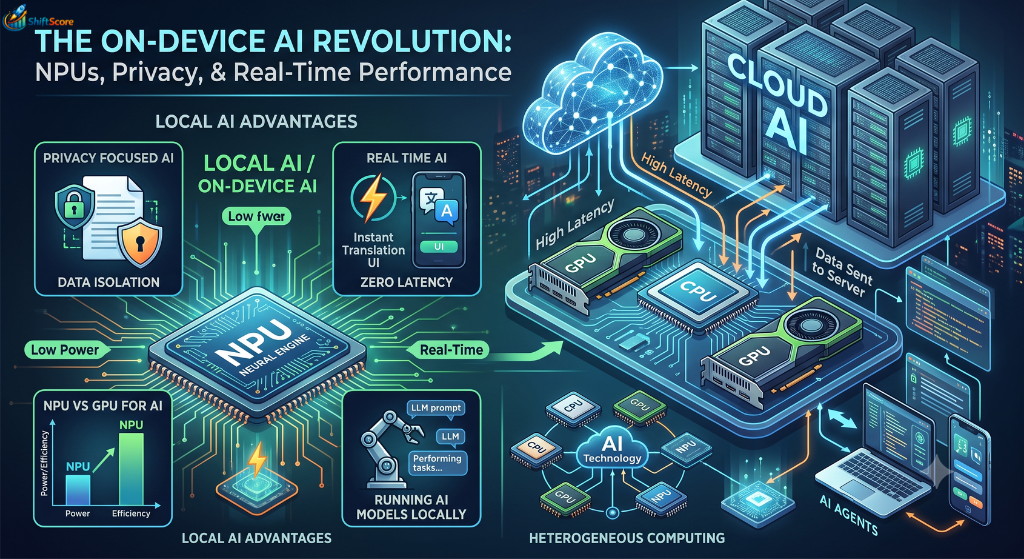
Unlike traditional facilities, AI-focused data centers are designed to support thousands of specialized processors working together simultaneously.
These advanced facilities feature high-speed networking, liquid cooling systems, intelligent power management, and optimized storage architectures.
Growing demand for AI data centers is encouraging governments and private companies to build new facilities capable of supporting future AI applications while improving energy efficiency.
AI Hardware Drives Performance
Behind every successful AI model is powerful AI hardware.
Specialized processors, GPUs, networking chips, memory technologies, and storage systems enable AI applications to process massive amounts of information in real time.
Manufacturers continue introducing faster and more energy-efficient hardware to meet increasing demand from research organizations, enterprises, and cloud providers.
Continued innovation in AI hardware will play a critical role in supporting future AI breakthroughs.
Semiconductor Industry Benefits from AI Growth
The expanding semiconductor industry is one of the biggest beneficiaries of rising AI demand.
Semiconductor manufacturers are producing increasingly advanced chips optimized for machine learning, deep learning, and high-performance computing.
Governments are also supporting domestic chip manufacturing to strengthen supply chains and reduce dependence on overseas production.
As AI adoption accelerates, the semiconductor industry is expected to remain one of the most important sectors driving global technological innovation.
Future Technology Depends on AI Investment
The next generation of future technology will rely heavily on strong digital infrastructure.
Autonomous vehicles, robotics, smart cities, precision healthcare, cybersecurity, industrial automation, and scientific research all require advanced AI systems backed by reliable computing resources.
Continued AI investment will help organizations develop faster algorithms, more efficient hardware, and scalable cloud platforms capable of supporting billions of AI-powered applications worldwide.
Countries investing in AI today are positioning themselves to lead tomorrow’s technology economy.
Conclusion
The projected $1.3 trillion AI infrastructure spending marks one of the largest technology investment waves in history. Increasing demand for artificial intelligence, cloud computing, enterprise AI, generative AI, AI hardware, and AI data centers is transforming industries around the world.
At the same time, the semiconductor industry continues to innovate, delivering the advanced chips needed to power modern AI systems. As businesses and governments expand AI investment, strong AI infrastructure will become the foundation of future technology, enabling smarter services, faster innovation, and long-term economic growth.









Leave a Reply