

The year 2026 marks a turning point in human history—an era where biotechnology and digital innovation are merging to redefine life itself. This transformation, often called the Biological Revolution, is driven by breakthroughs in bioengineering, artificial intelligence in healthcare, and cutting-edge fields like synthetic biology and genetic engineering. Together, these technologies are not just treating diseases—they are rewriting the very code of life.
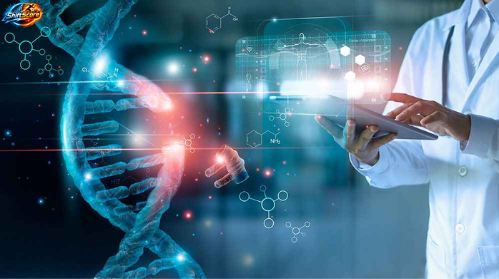
The Rise of Intelligent Biology
At the heart of this revolution lies artificial intelligence in healthcare, which is accelerating discoveries at an unprecedented pace. From diagnosing diseases to predicting genetic disorders, AI is transforming how scientists approach molecular biology and medicine.
One of the most powerful applications is ai drug discovery, where machine learning models analyze vast datasets to identify potential treatments in a fraction of the time traditional methods require. This is closely linked with bioinformatics, a field that combines biology with data science to interpret complex biological information.
In 2026, ai in genomics is enabling researchers to decode DNA faster and more accurately than ever before. Combined with advanced genome mapping, scientists can now understand genetic variations across populations, paving the way for highly targeted treatments.
CRISPR and the Era of Gene Editing
Perhaps the most revolutionary tool in modern genetic engineering is crispr. Known for its precision, crispr technology allows scientists to edit DNA sequences with remarkable accuracy. This has opened doors to curing genetic diseases that were once considered untreatable.
With gene therapy, doctors can now replace or repair faulty genes responsible for inherited conditions. Diseases like sickle cell anemia and certain cancers are being treated using these techniques, marking a major milestone in biotechnology.
The integration of crispr technology with ai in genomics is further enhancing its capabilities. AI helps predict the outcomes of gene edits, reducing risks and improving success rates in gene therapy applications.
Personalized Medicine: Healthcare Tailored to You
Another major breakthrough in the Biological Revolution is personalized medicine. Unlike traditional treatments, which follow a one-size-fits-all approach, personalized medicine uses genetic information to customize therapies for individual patients.
By combining genome mapping, bioinformatics, and ai in genomics, doctors can identify the most effective treatments based on a patient’s unique genetic profile. This approach not only improves outcomes but also minimizes side effects.
In 2026, artificial intelligence in healthcare is playing a crucial role in scaling personalized medicine. AI systems analyze patient data, lifestyle factors, and genetic information to recommend precise treatment plans.
Synthetic Biology and Bioengineering Breakthroughs
The field of synthetic biology is pushing the boundaries of what is possible. Scientists are now designing and constructing new biological systems, essentially creating life forms with specific functions.
Through advanced bioengineering, researchers are developing organisms that can produce biofuels, clean pollutants, and even manufacture medicines. This intersection of biotechnology and engineering is revolutionizing industries beyond healthcare.
At the molecular level, protein engineering is enabling scientists to design proteins with enhanced or entirely new functions. These engineered proteins are being used in drug development, industrial processes, and even environmental solutions.
Stem Cells and Regenerative Medicine
One of the most promising areas of the Biological Revolution is stem cell technology. Stem cells have the unique ability to develop into different types of cells, making them essential for regenerative medicine.
Using stem cell technology, scientists are working on repairing damaged tissues and organs. Combined with gene therapy and bioengineering, this approach could eventually eliminate the need for organ transplants.
In 2026, breakthroughs in molecular biology and bioinformatics are helping researchers better understand how stem cells function, accelerating their application in real-world treatments.
Epigenetics: Beyond DNA
While genetic engineering focuses on altering DNA sequences, epigenetics explores how gene expression is regulated without changing the underlying code. Environmental factors, lifestyle, and even stress can influence how genes are turned on or off.
The integration of epigenetics with ai in genomics is uncovering new insights into complex diseases like cancer, diabetes, and neurological disorders. By understanding these patterns, scientists can develop more effective therapies through personalized medicine.
Challenges and Ethical Considerations
Despite its immense potential, the Biological Revolution raises important ethical questions. The ability to modify genes using crispr technology and genetic engineering has sparked debates about “designer babies” and genetic inequality.
Data privacy is another concern, especially with the growing use of bioinformatics and artificial intelligence in healthcare. Protecting sensitive genetic information is crucial as technologies like genome mapping become more widespread.
Moreover, the rapid advancement of synthetic biology and bioengineering requires strict regulations to prevent misuse and ensure safety.
The Future of Life Sciences
Looking ahead, the convergence of biotechnology, ai drug discovery, and protein engineering will continue to redefine healthcare and beyond. The integration of ai in genomics with stem cell technology and gene therapy promises a future where diseases are not just treated but prevented entirely.
As molecular biology and bioinformatics evolve, our understanding of life will deepen, unlocking possibilities that were once confined to science fiction. From extending human lifespan to creating sustainable ecosystems, the impact of this revolution will be profound.
Conclusion
The Biological Revolution of 2026 is more than a technological shift—it is a fundamental transformation in how we understand and interact with life itself. With advancements in crispr, genetic engineering, synthetic biology, and personalized medicine, humanity is gaining unprecedented control over biology.
However, with great power comes great responsibility. As we continue to explore the potential of epigenetics, bioengineering, and artificial intelligence in healthcare, it is essential to balance innovation with ethics.
In this new era, the fusion of biology and technology is not just rewriting the code of life—it is redefining the future of humanity.





Leave a Reply