

Infrastructure plays a crucial role in shaping the growth and progress of any nation. It is often called the backbone of economic development because it supports all major sectors like industry, agriculture, and services. Without proper infrastructure development, no country can achieve long-term growth or national development. From roads and bridges to telecommunications and public utilities, infrastructure connects people, markets, and resources, making economic activities faster and more efficient.
What is Infrastructure?
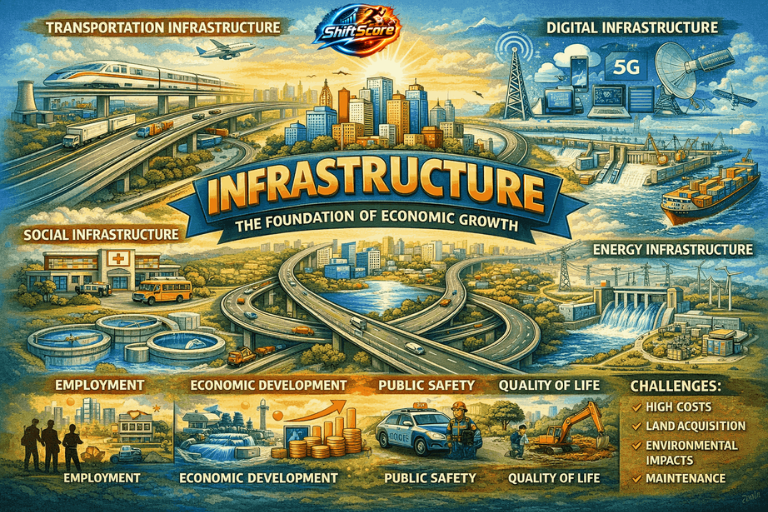
Infrastructure refers to the basic physical and organizational facilities required for the functioning of a society. It includes transport systems, power supply, water systems, and communication networks. In today’s modern world, digital infrastructure has also become equally important, enabling internet services, online businesses, and smart governance.
Infrastructure is broadly divided into:
- Physical infrastructure (roads, railways, building materials, energy)
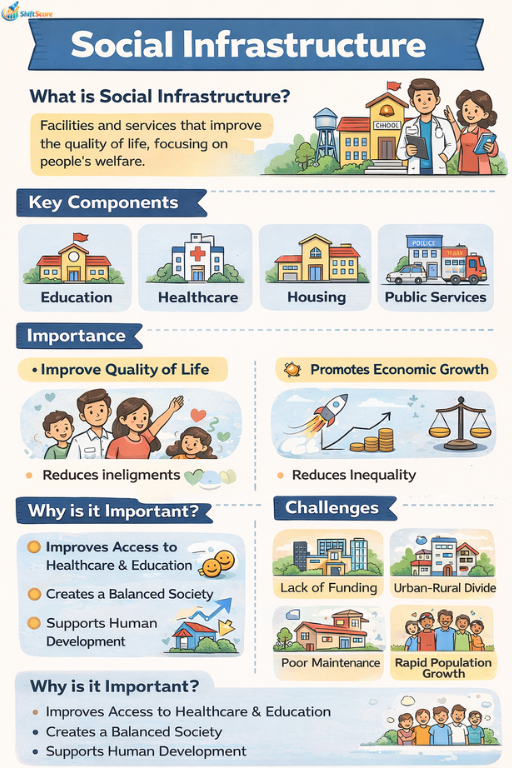
- Social infrastructure (health, education)
- Digital infrastructure (internet, telecom)
All these components together contribute to overall economic development.
Role of Infrastructure in Economic Development
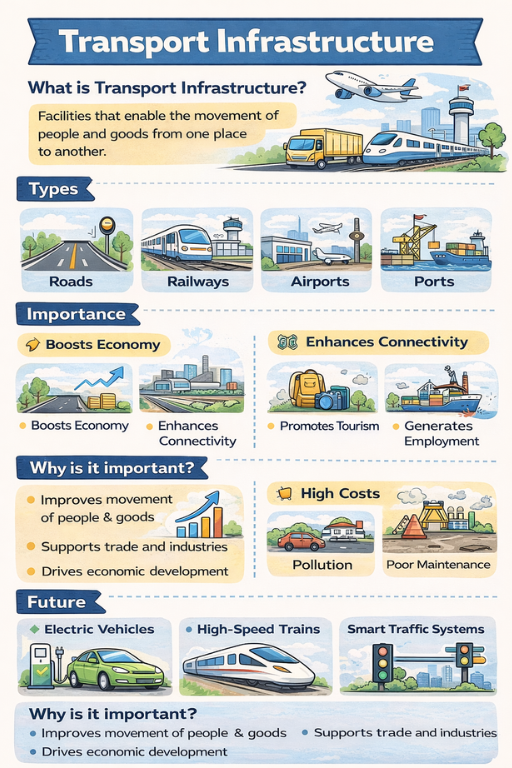
Infrastructure directly impacts productivity, efficiency, and growth. A strong construction industry helps in building roads, bridges, and buildings, which boosts economic activities. For example, better roads reduce transportation costs, helping industries grow faster.
Similarly, telecommunications enable faster communication, which is essential for businesses and trade. Efficient public utilities like electricity and water supply ensure smooth industrial operations.
In countries like India, improving infrastructure in India has been a major focus to accelerate national development and attract foreign investments.
Infrastructure in India
India is rapidly growing, and infrastructure development is at the center of this growth. Government initiatives like the smart cities mission aim to improve urban living by focusing on urban planning, better roads, clean energy, and digital connectivity.
Many large-scale infrastructure projects such as highways, metro systems, and airports are being developed with the help of private and public sector infrastructure companies. These projects not only improve connectivity but also create employment opportunities.
Role of Construction Industry and Civil Engineering
The construction industry is one of the biggest contributors to infrastructure growth. It involves the use of building materials, advanced technology, and skilled labor to create strong structures.
Civil engineering plays a vital role in designing and maintaining infrastructure systems like bridges, dams, and roads. Engineers ensure safety, durability, and efficiency in all projects.
Modern construction management techniques help in completing projects on time and within budget. The use of heavy machinery like cranes, bulldozers, and excavators has made construction faster and more efficient.
Green Infrastructure and Sustainability
Today, the focus is shifting towards green infrastructure to promote sustainable growth. This includes eco-friendly buildings, renewable energy systems, and efficient waste management.
Green infrastructure reduces environmental impact and ensures long-term sustainability. It also supports economic development by reducing costs related to pollution and energy consumption.
For example, solar-powered systems and rainwater harvesting are becoming common in modern infrastructure projects.
Digital Infrastructure: The Future
In the modern era, digital infrastructure is as important as physical infrastructure. High-speed internet, cloud computing, and advanced telecommunications systems enable digital transformation.
Digital infrastructure supports:
- Online education
- E-commerce
- Digital banking
- Smart governance
It plays a key role in initiatives like the smart cities mission, where technology is used to improve urban services and quality of life.
Role of Infrastructure Companies
An infrastructure company is responsible for planning, financing, and executing infrastructure projects. These companies work on large-scale developments like highways, airports, and smart cities.
They use advanced tools, construction management strategies, and heavy machinery to ensure efficient project execution. Their contribution is essential for rapid infrastructure development and economic growth.
Challenges in Infrastructure Development
Despite its importance, infrastructure development faces several challenges:
- High cost of building materials
- Land acquisition issues
- Environmental concerns
- Delays in infrastructure projects
- Lack of proper urban planning
To overcome these challenges, better policies, investment, and technology adoption are required.
Future of Infrastructure in India
The future of infrastructure in India looks promising. With increased investment and government focus, the country is moving towards modern and sustainable infrastructure.
Key future trends include:
- Expansion of digital infrastructure
- Growth of green infrastructure
- Development of smart cities
- Improved public utilities
- Advanced construction industry technologies
All these developments will contribute to faster economic development and improved living standards.
Conclusion
Infrastructure is truly the foundation of economic development and national development. From roads and buildings to telecommunications and digital infrastructure, every component plays a vital role in growth.
A strong construction industry, efficient civil engineering, and proper urban planning are essential for successful infrastructure systems. With initiatives like the smart cities mission and a focus on green infrastructure, countries like India are moving towards a brighter and more sustainable future.
In simple words, without infrastructure, development is impossible — but with strong infrastructure, growth becomes unstoppable.






Leave a Reply