

The latest Strait of Hormuz latest news has once again placed the Middle East at the center of global attention. Rising geopolitical tensions and ongoing diplomatic discussions have increased uncertainty across international energy markets. As one of the world’s most important shipping routes, the Strait of Hormuz plays a critical role in transporting crude oil from Gulf producers to international buyers. Any disruption in this narrow waterway can quickly influence global oil prices, crude oil prices, and worldwide economic activity.
Recent Middle East news shows that regional governments continue to monitor the security situation closely while international leaders encourage dialogue to avoid further escalation. The Middle East crisis 2026 has raised concerns among investors, shipping companies, and energy analysts because millions of barrels of oil pass through the Strait of Hormuz every day. As a result, even small developments in the region can have a significant impact on the oil market.
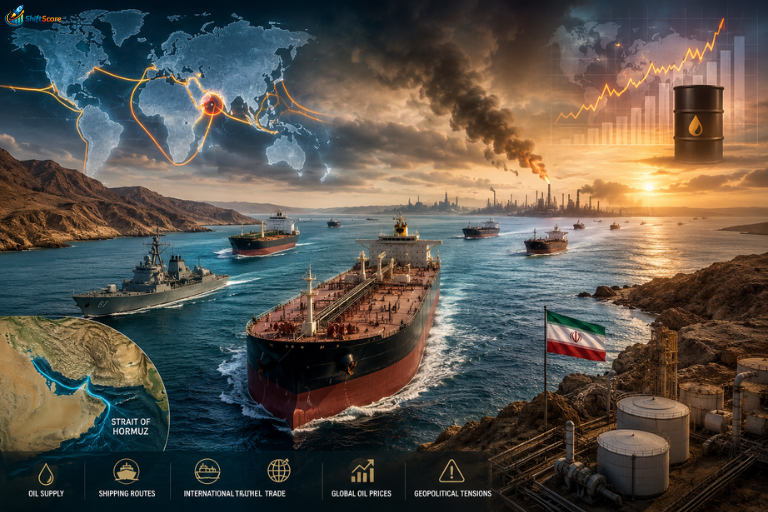
According to the latest world news, energy traders are watching every update related to the Strait of Hormuz news. Concerns about oil supply have pushed market participants to reassess risks, especially as demand for energy remains strong in many parts of the world. If shipping activity slows or security risks increase, global oil prices and crude oil prices could rise further, affecting transportation costs, manufacturing, and consumer prices across multiple countries.
The Strait of Hormuz remains one of the busiest shipping routes for global energy trade. A large share of the world’s oil exports travels through this strategic passage before reaching markets in Asia, Europe, and North America. Because of its importance, governments and shipping companies are closely monitoring developments to ensure that international trade continues without major disruptions. Any interruption to these shipping routes could delay deliveries and place additional pressure on the global oil supply.
The latest Iran news has also attracted global attention as diplomatic efforts continue alongside regional security concerns. Analysts believe that reducing geopolitical tensions is essential for maintaining stability in the oil market and protecting international trade. Businesses that rely on stable fuel prices are particularly concerned about any changes that could influence global oil prices in the coming weeks.
Economic experts say the ongoing Middle East crisis 2026 is not only a regional issue but also a global economic challenge. Higher crude oil prices can increase transportation expenses, production costs, and inflation in many countries. As the world continues to depend heavily on Gulf energy exports, maintaining a stable oil supply through the Strait of Hormuz remains a top priority for governments and global businesses.
The latest Strait of Hormuz latest news highlights how closely energy markets are connected to international politics. While diplomatic talks continue, investors remain cautious, keeping a close watch on Middle East news, Iran news, and developments affecting the Strait of Hormuz. The outcome of these discussions could shape future global oil prices, influence the global energy crisis, and determine the stability of international trade and worldwide economic growth.






Leave a Reply