

The rapid evolution of artificial intelligence has entered a new phase in 2026—agentic ai. Unlike traditional AI systems that rely on human prompts, agentic ai focuses on autonomy, decision-making, and independent task execution. From businesses to everyday applications, ai agents are transforming how technology interacts with the world.
In this blog, we will explore what is agentic ai, its architecture, tools, trends, and how it is shaping the future of autonomous systems.
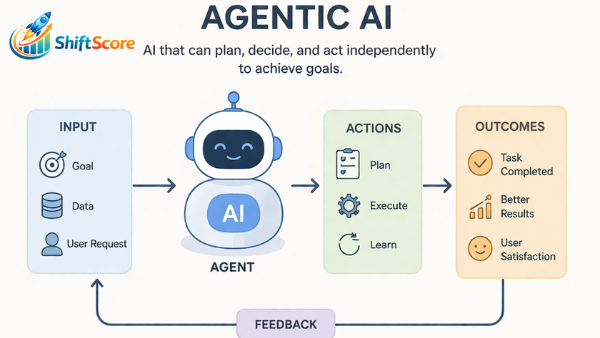
What is Agentic AI?
To understand what is agentic ai, think of systems that can act independently without constant human input. The agentic ai meaning revolves around creating intelligent systems capable of planning, reasoning, and executing tasks on their own.
Unlike basic AI models, autonomous ai agents can analyze situations, make decisions, and take actions in real time. These systems are often referred to as digital agents or intelligent agents in ai, and they are designed to mimic human-like decision-making processes.
In simple terms, agentic ai is about giving AI the ability to act, not just respond.
Evolution of AI Agents
The journey from simple automation to agentic ai has been remarkable. Early AI systems were reactive, but modern ai agents are proactive and goal-oriented.
Today, smart assistants like voice-based AI tools are evolving into fully capable autonomous ai agents. These agents can handle complex workflows, automate business processes, and even collaborate with other systems.
The rise of agentic ai trends 2026 shows that organizations are increasingly adopting these technologies to improve efficiency and reduce manual effort.
Agentic AI Architecture
Understanding agentic ai architecture is key to grasping how these systems work. A typical architecture includes:
- Perception (data input and understanding)
- Decision-making (planning and reasoning)
- Action execution (task completion)
- Learning (continuous improvement)
This layered structure allows ai agents to function as autonomous systems, capable of adapting to changing environments.
Modern agentic ai frameworks are designed to support this architecture, enabling developers to build scalable and intelligent solutions.
Agentic AI Frameworks and Tools
The growth of agentic ai frameworks has made it easier to develop and deploy intelligent systems. These frameworks provide the building blocks needed to create advanced digital agents.
One popular approach involves using tools like LangChain, which supports the development of langchain agents. These agents can connect with APIs, process data, and execute tasks autonomously.
There are also various agentic ai tools available that help businesses automate workflows, manage data, and improve decision-making. These tools are essential for scaling agentic ai solutions across industries.
AI Agents Examples in Real Life
To better understand the impact of agentic ai, let’s look at some practical ai agents examples:
- Customer support bots that resolve queries without human intervention
- Financial systems that analyze markets and execute trades
- Healthcare assistants that monitor patient data and provide recommendations
- Marketing tools that optimize campaigns automatically
These ai agents examples demonstrate how autonomous ai agents are becoming an integral part of modern life.
How to Build AI Agents
A common question among developers is how to build ai agents. The process involves several key steps:
- Define the objective of the agent
- Choose the right agentic ai frameworks
- Design the agentic ai architecture
- Integrate data sources and APIs
- Implement learning mechanisms
Understanding how to build ai agents requires knowledge of machine learning, programming, and system design.
How to Create AI Agents
Another important aspect is how to create ai agents efficiently. While the process overlaps with building, creation focuses more on deployment and usability.
To successfully learn how to create ai agents, developers often use pre-built agentic ai tools and platforms. These tools simplify the development process and allow faster implementation of agentic ai solutions.
Frameworks like LangChain make it easier to create langchain agents that can perform complex tasks with minimal coding.
Benefits of Agentic AI
The adoption of agentic ai offers numerous advantages:
- Increased automation and efficiency
- Reduced human intervention
- Faster decision-making
- Scalability across industries
By leveraging autonomous systems, businesses can streamline operations and improve productivity. The rise of digital agents is also enabling new business models and opportunities.
Challenges and Risks
Despite its benefits, agentic ai comes with challenges:
- Ethical concerns around decision-making
- Data privacy and security issues
- Complexity in designing agentic ai architecture
- Risk of unintended actions by autonomous ai agents
Addressing these challenges is essential for the responsible development of agentic ai.
Agentic AI Trends 2026
The agentic ai trends 2026 highlight the growing importance of autonomous systems. Some key trends include:
- Increased adoption of agentic ai frameworks
- Growth of ai agents in enterprise applications
- Integration of smart assistants with business workflows
- Expansion of langchain agents and similar technologies
These trends indicate that agentic ai will continue to evolve and play a major role in the future of technology.
Future of Agentic AI
Looking ahead, agentic ai is expected to redefine how humans interact with machines. As intelligent agents in ai become more advanced, they will be able to handle increasingly complex tasks.
The combination of agentic ai tools, advanced frameworks, and improved architecture will lead to more powerful and efficient systems. The future of autonomous systems lies in collaboration between humans and AI.
Conclusion
In conclusion, agentic ai represents a significant leap forward in artificial intelligence. By understanding what is agentic ai, its architecture, tools, and applications, we can better prepare for a future driven by intelligent systems.
From ai agents examples to real-world applications, the impact of autonomous ai agents is already visible. As agentic ai trends 2026 continue to unfold, the role of digital agents and smart assistants will only grow stronger.
Whether you are a developer learning how to build ai agents or a business exploring agentic ai tools, now is the perfect time to embrace this transformative technology.







Leave a Reply