

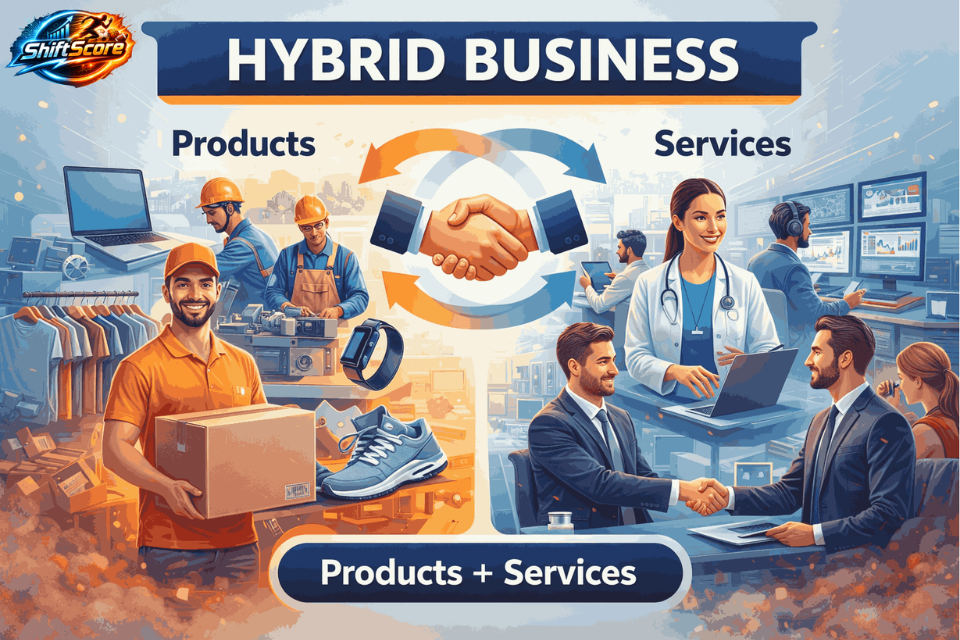
In today’s evolving market, businesses are no longer limited to selling only products or offering just services. The rise of hybrid models has transformed how companies operate, combining both approaches to create stronger and more sustainable growth. This modern concept is quickly becoming one of the most effective entrepreneurship ideas for startups and established brands alike.
A hybrid business blends physical or digital products with services to deliver a complete solution to customers. Instead of relying on a single revenue stream, businesses diversify their offerings and create better opportunities for growth. For example, a fitness brand may sell equipment while also providing online coaching. This combination improves engagement and builds long-term relationships with customers.

Understanding the Hybrid Approach
At its core, a hybrid business focuses on delivering convenience and efficiency. Customers today prefer brands that can meet multiple needs in one place. This is where the concept of an all in one solution becomes highly valuable. By offering both products and services, businesses reduce customer effort and improve satisfaction.
For entrepreneurs exploring new entrepreneurship ideas, this model offers flexibility and scalability. It allows businesses to adapt to changing market demands while maintaining consistent income streams.
Building a Strong Value Proposition
A clear and compelling value proposition is essential for success. It defines why customers should choose your brand over competitors. In a hybrid model, the ability to combine products and services creates a stronger appeal.
For instance, a company that sells software and also provides support services delivers more value than one that only sells the product. This integrated approach enhances trust and encourages long-term customer relationships. A well-defined value proposition ensures that customers understand the full benefits of your offerings.
Improving Customer Experience
One of the biggest advantages of hybrid businesses is their ability to enhance the customer experience. By offering multiple solutions under one brand, companies can simplify the customer journey.
For example, an online store that also provides installation or after-sales services ensures a smoother experience. This not only increases satisfaction but also encourages repeat purchases. A seamless customer experience plays a key role in building loyalty and brand reputation.
Additionally, businesses can use data and insights to provide personalized recommendations. A personalized approach helps in understanding customer preferences and delivering solutions that match their needs more effectively.
Role of Omnichannel Retail
In today’s digital world, businesses must connect with customers across multiple platforms. This is where omnichannel retail becomes important. It allows businesses to provide a consistent experience across online and offline channels.
With omnichannel retail, customers can interact with a brand through websites, mobile apps, or physical stores without any disruption. This seamless integration supports hybrid businesses by connecting products and services into a unified system.
All in One Solution Advantage
Customers value convenience more than ever before. The all in one solution approach helps businesses meet this demand by offering everything in a single place.
For example, a digital marketing company that provides tools, consulting, and training becomes a complete solution for clients. This not only saves time but also strengthens trust. Businesses that adopt this approach can stand out in competitive markets.
Future of Hybrid Businesses
Hybrid models are gaining popularity because they align with modern consumer expectations. People are looking for efficient, reliable, and personalized solutions. Businesses that can deliver both products and services are better positioned for long-term success.
Moreover, hybrid businesses can generate multiple income streams, making them more resilient during economic changes. This is why they are considered one of the most promising entrepreneurship ideas in today’s market.
Challenges and Solutions
While hybrid businesses offer many benefits, they also come with challenges. Managing both products and services requires proper planning and coordination. Companies must ensure consistency in quality to maintain a strong customer experience.
Technology can help overcome these challenges. Tools like automation and data analytics enable businesses to streamline operations and deliver better results. By focusing on efficiency and innovation, companies can successfully manage hybrid models.
Conclusion
The hybrid business model represents a powerful combination of innovation and practicality. By blending products and services, businesses can create a strong value proposition, improve customer satisfaction, and build long-term success.
With the growing importance of omnichannel retail and the demand for an all in one solution, hybrid businesses are set to shape the future. For anyone exploring new opportunities, this model offers a smart and sustainable path forward.






Leave a Reply